|
 |
||||
Become a
›› Introduction -------------------------------- Inspection Courses Reinforced Concrete: Structural Ultrasonic Technician Magnetic Particle Testing Level II Special Inspector Certification Renewal Lateral Framing Special Inspection Proprietary Anchors Inspection WAQTC |
Information about becoming a Special Inspector |
|
|||
While most think of construction inspectors as being strictly employed by city, county and local governments, there is another segment of the industry that provides supplementary inspection services and works from the private sector. Special Inspections are defined in the building code, and can generally be characterized as being inspections requiring refined knowledge of materials and construction techniques, as well as a commitment for time on the project that individual building departments would otherwise have difficulty meeting. These inspection types usually revolve around concrete, masonry, structural steel and wood framing and constitute most of the inspection of shell and core construction of commercial and industrial projects. Special Inspector’s Job Description: On a day-to-day basis, the inspection agency will designate one or more projects for an inspector to service, based on their experience, capability and requisite certifications. The inspector is expected to navigate to the various projects, often under tight deadlines to reach jobsites to inspect specific construction activities, to test materials, gather samples and provide accurate and detailed reports to the contractor prior to leaving. Inspectors often work without direct supervision but are expected to follow standards and guidelines set by the inspection agency, and dictated by their accreditation body and applicable building code. Field Supervisors, the Technical Director and Supervising Laboratory Technician ensure these standards are followed and provide day-to-day management and guidance to field personnel. Key Personality Traits of a Special Inspector: Certifications: The building department jurisdictions that comprise the membership of WABO expect that applicants for any special inspection registration be knowledgeable and competent in the type of special inspection category they have applied for. One method for ensuring this competence is participation and successful completion of these national exams, most are then followed by an interview with a person designated by WABO to gauge the applicant’s experience and grasp of practical knowledge contained in the building code. WABO administers several registration categories that do not correspond to an ICC certification, and do not have a nationalized exam, these may have an exam administered by WABO as part of the registration process. Typically, hiring cycles occur in late spring and early summer to compensate for the busy summer season. Training courses and exams are usually scheduled to correspond to this round of hiring. Applicants usually need only wait a month before having the opportunity to take the ACI Concrete Field Testing Technician - Grade I certification exam, with NWCEL-sponsored Concrete Placement and Batch Plant courses either underway or set to begin soon after. The certifications offered by the ICC may be taken without any corresponding course work, but NWCEL offers courses designed to prepare inspectors to pass the ICC exams for Reinforced Concrete, Prestressed Concrete, Structural Masonry, and Structural Steel and Bolting, Structural Welding, and Spray-applied Fireproofing. NWCEL course work is required for Shotcrete and highly encouraged for Lateral Framing. These courses are typically offered at least once per year. WABO typically will wish to see some significant project experience prior to allowing an interview. Once this time is accumulated, a properly motivated inspector may be fully licensed within 3 to 5 years. |
|
||||
|
|||||
 |
|
||||









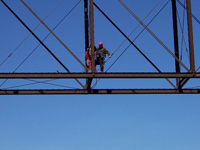 The special inspector is a professional person of high moral character, integrity and honesty. Special inspectors, and the inspection agencies that employ them are thought of as consultants in the realm of professional services. They work side-by-side with contractors and design professionals (architects, civil and structural engineers) on all manner of commercial, industrial and public projects. Regardless of what they are inspecting, their duty is to see that the work they inspect is completed not only to building department approved blueprints, but also to applicable building code. Their competence is measured by their accumulation of certifications that are earned through classroom instruction, nationalized building-code based exams, and personal interviews with building officials.
 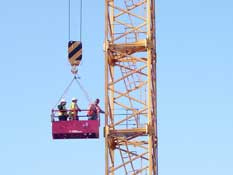 Inspection agencies in Western Washington and parts of Eastern Washington are governed by the Washington Association of Building Officials (WABO), and are required to follow a series of guidelines, not only to secure their own institutional licensing as a Registered Agency, but also, to register their employees. As of the fall of 2020, WABO has 11 registration categories that a special inspector can become registered in with more in the works. Many of these registration categories require the successful completion of a national exam offered by the International Code Council (ICC), the same association that develops model codes and standards used worldwide to construct safe, sustainable, affordable, and sesilient structures. Each ICC certification is comprised of 3 exams, a 60 question exam on the building code related to the specific inspection type, a 30 plan reading exam related to the specific inspection type and a 25 question exam covers general special inspection job tasks. If an individual passes these exams, they will receive a certification card from ICC for that inspection type.